
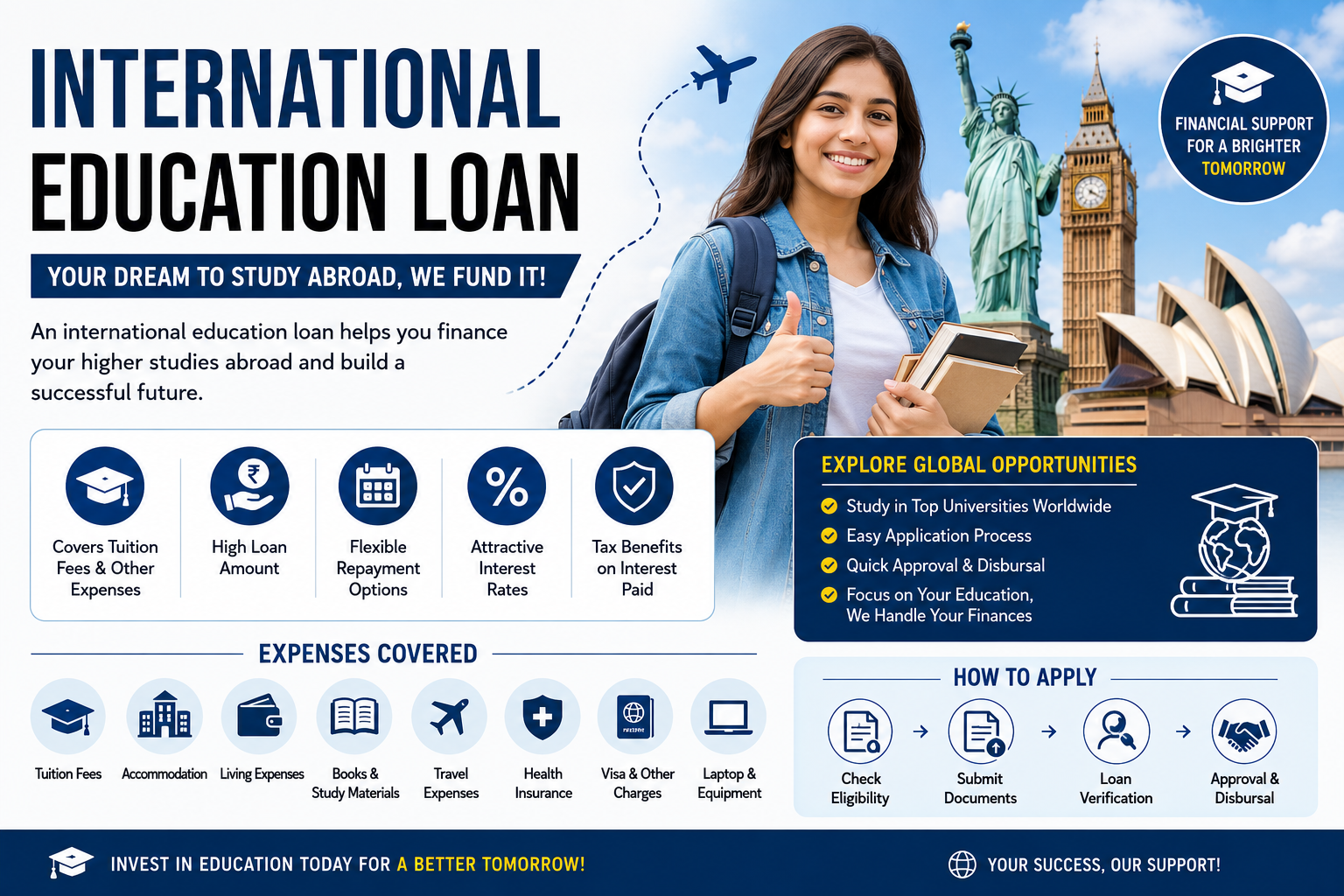
Pursuing higher education abroad is a dream for many students. However, the cost of tuition, accommodation, travel, and living expenses can be significant. An international education loan helps students finance their studies without putting a heavy financial burden on their families.
Whether you are planning to study in the USA, Canada, the UK, Australia, Germany, or any other country, understanding the education loan for international studies can help you make informed financial decisions.
In this guide, we’ll discuss everything you need to know about international education loans, including eligibility, benefits, required documents, loan amounts, interest rates, and the application process.
What Is an International Education Loan?
An international education loan is a financial product offered by banks and financial institutions to students pursuing higher education outside their home country. The loan covers educational expenses and is repaid after the student completes their course, depending on the lender’s repayment terms.
Most lenders offer loans for undergraduate, postgraduate, doctoral, diploma, and professional courses at recognized international universities.
Expenses Covered Under an International Education Loan
A comprehensive study abroad education loan usually covers:
- Tuition fees
- Accommodation expenses
- Living expenses
- Books and study materials
- Laptop (if approved)
- Travel expenses
- Visa charges
- Health insurance
- Examination fees
- Laboratory and library charges
The exact coverage depends on the lender and loan scheme.
Benefits of an International Education Loan
Choosing an education loan for studying abroad offers several advantages.
Financial Support
Students can pursue their dream education without arranging the entire amount upfront.
High Loan Amount
Many banks provide substantial loan amounts based on the university, course, and repayment capacity.
Flexible Repayment
Most lenders offer a moratorium period, allowing students to begin repayment after completing their course or securing employment.
Competitive Interest Rates
Students may benefit from attractive interest rates and flexible repayment tenures.
Tax Benefits
In many cases, borrowers can claim tax benefits on the interest paid under applicable tax laws.
Eligibility Criteria
Applicants generally need to meet the following conditions:
- Be an Indian citizen.
- Secure admission to a recognized international university.
- Meet the lender’s age requirements.
- Have a co-applicant or guarantor if required.
- Demonstrate repayment capability as per lender guidelines.
Eligibility requirements vary between financial institutions.
Documents Required
Students typically need the following documents when applying for an international education loan:
- Aadhaar Card
- PAN Card
- Passport
- Admission letter from the university
- Academic records
- Entrance examination scores (if applicable)
- Passport-size photographs
- Address proof
- Income proof of co-applicant
- Bank statements
- Cost estimate issued by the university
Some lenders may request additional documents.
Loan Amount
The education loan amount for studying abroad depends on several factors, including:
- University ranking
- Course type
- Country of study
- Tuition fees
- Living expenses
- Applicant profile
- Co-applicant’s financial strength
Some lenders finance a significant portion of the total education cost, subject to their lending policies.
Interest Rates
The international education loan interest rate varies depending on:
- Loan amount
- Course
- Country
- Credit profile
- Collateral (if applicable)
- Lender policies
Students should compare multiple lenders before making a decision.
Secured vs. Unsecured Education Loan
Secured Education Loan
A secured education loan requires collateral such as property or other eligible assets. These loans often come with lower interest rates and higher loan amounts.
Unsecured Education Loan
An unsecured education loan does not require collateral but may have stricter eligibility requirements and different interest rates.
How to Apply for an International Education Loan
Step 1: Obtain Admission
Secure admission to a recognized international university.
Step 2: Compare Loan Options
Research banks and financial institutions to compare loan features, repayment terms, and interest rates.
Step 3: Collect Documents
Gather all required documents before starting your application.
Step 4: Submit Your Application
Apply online or visit the nearest branch of your preferred lender.
Step 5: Verification
The lender verifies your academic credentials, financial documents, and eligibility.
Step 6: Loan Approval
After successful verification, the loan is sanctioned and disbursed according to the institution’s payment schedule.
Tips to Increase Education Loan Approval
Improve your approval chances by following these tips:
- Apply to recognized universities.
- Maintain a strong academic record.
- Ensure your documents are complete.
- Choose an affordable course with good career prospects.
- Have a financially stable co-applicant.
- Maintain a good credit history where applicable.
Conclusion
An international education loan is one of the most effective ways to finance higher education abroad. It allows students to focus on academic success while easing the immediate financial burden of tuition fees and living expenses.
Before applying, compare lenders, understand the repayment terms, review the interest rates, and ensure you meet the eligibility requirements. Choosing the right education loan for international studies can help you achieve your dream of studying abroad with greater financial confidence.