

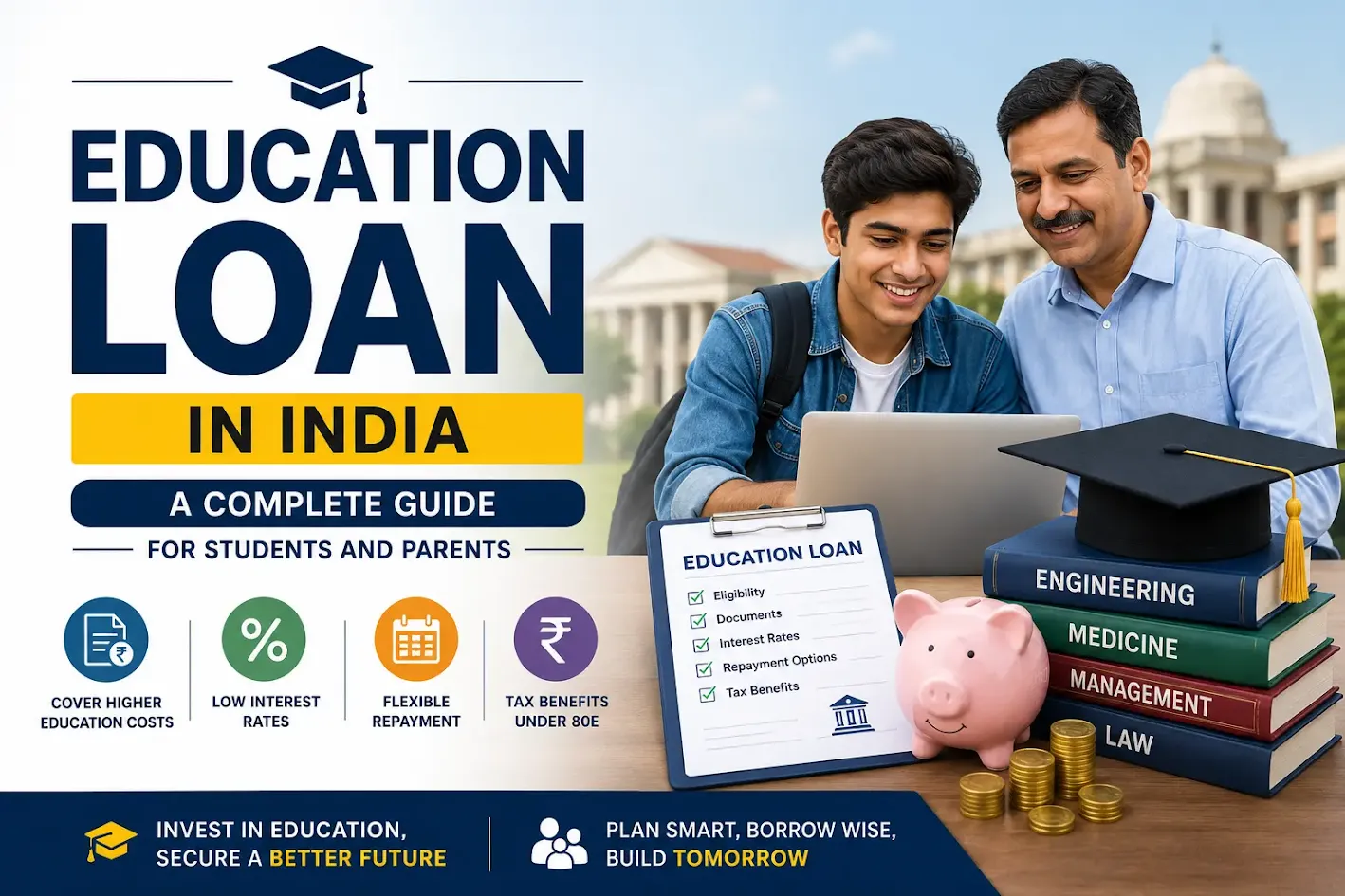
Education Loan in India: A Complete Guide for Students and Parents
The cost of higher education can be a major financial challenge for students and families. Tuition fees, accommodation, books, travel and other academic expenses can quickly add up, especially for professional courses and overseas studies.
An education loan can help students finance eligible higher education while spreading repayment over a longer period. Depending on the lender and loan scheme, the funds may be used for tuition fees, hostel charges, study materials and other approved expenses.
This guide explains how student loans work in India, who can apply, what documents are required, how interest rates are determined and what to consider before choosing a lender.
Education Loan at a Glance
| Feature | General Information |
| Applicant | Student pursuing an eligible course |
| Co-applicant | Usually a parent or guardian |
| Purpose | Tuition and approved academic expenses |
| Study destination | India and eligible overseas institutions |
| Interest rate | Depends on the lender and borrower profile |
| Security | May be required for higher loan amounts |
| Repayment | Usually starts after the course and applicable moratorium |
| Tax treatment | Benefits may be available under applicable rules |
Terms and conditions vary between lenders. Always verify the latest information before applying.
What Is an Education Loan?
An education loan is a borrowing facility designed to help students pay for higher education. It can be used for eligible courses at recognised institutions in India and, in many cases, overseas.
Depending on the scheme, financing may be available for:
- Tuition and admission fees
- Examination and laboratory charges
- Hostel and accommodation expenses
- Books and study materials
- Computers or other required equipment
- Certain travel expenses for overseas study
- Other approved academic costs
The student is usually the main borrower, while a parent or guardian may join the application as a co-borrower.
Who Is Eligible to Apply?
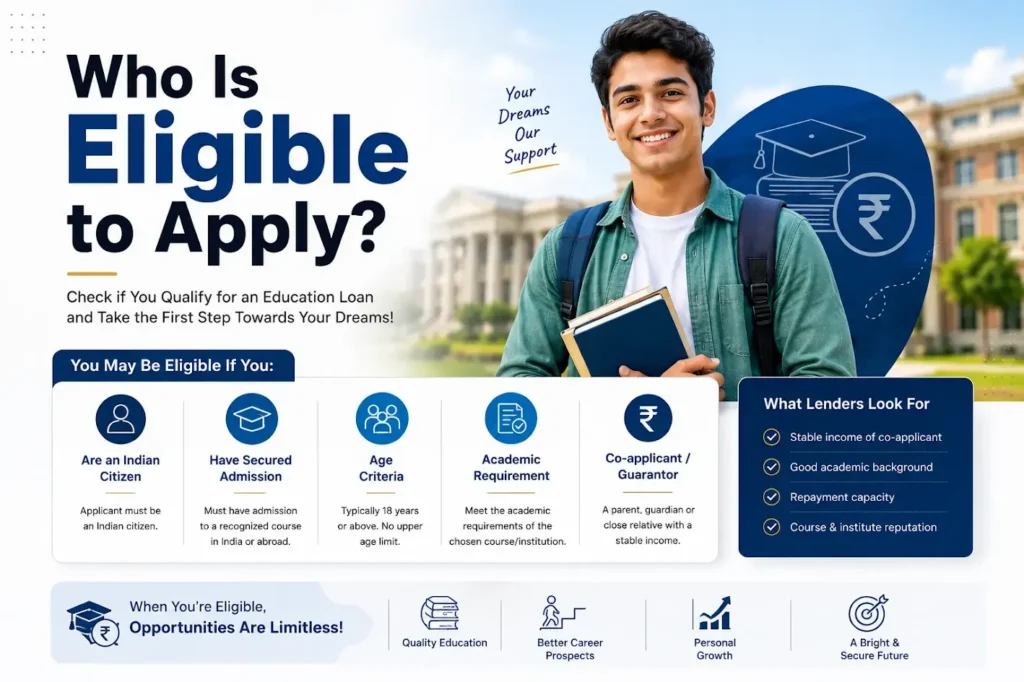
Eligibility requirements vary across banks and financial institutions, but lenders generally consider several common factors.
Admission to an Eligible Institution
The applicant normally needs to have secured admission to a recognised college, university or educational institution.
The admission process may involve:
- Entrance examinations
- Merit-based selection
- Counselling
- Other recognised procedures
The institution and programme may be reviewed as part of the lender’s assessment.
Course Eligibility
Financing may be available for a wide range of programmes, including:
- Undergraduate courses
- Postgraduate programmes
- Engineering
- Medicine
- Management
- Professional courses
- Technical education
- Vocational programmes
- Selected courses overseas
The exact list depends on the lender’s policy.
Academic Record
Previous academic performance and admission details may also be considered during the application process.
Parent or Guardian as Co-Applicant
A parent or guardian is commonly included in the application. The lender may review their income, credit history, existing financial commitments, and ability to support repayment. Before submitting your application, it is also worth comparing the Best Loan Special Offer available from different lenders to find an option that matches your financial needs and repayment capacity.
Interest Rates and Other Loan Costs
The rate charged on an education loan can vary significantly between lenders. Factors that may influence pricing include:
- Loan provider
- Type of course
- Institution
- Study destination
- Amount borrowed
- Co-applicant’s financial profile
- Security offered
- Applicable lending benchmark
Some products may have floating rates, meaning the interest charged can change over time.
When comparing offers, look beyond the advertised rate. Also check:
- Processing charges
- Margin requirements
- Repayment period
- Moratorium conditions
- Prepayment rules
- Late-payment charges
- Collateral requirements
- Other applicable fees
The total amount you repay is more important than the headline rate alone.
What Expenses Can Be Financed?
The expenses covered depend on the specific loan product. Commonly approved costs may include:
Tuition Fees
The main purpose of most education financing is to pay institutional fees.
Accommodation
Hostel charges and, in some cases, other approved accommodation expenses may be covered.
Books and Equipment
Study materials, books and essential equipment may qualify under the lender’s terms.
Examination and Other Institutional Charges
Certain academic and administrative fees may also be included.
Overseas Education Costs
Students travelling abroad for eligible programmes may be able to finance selected travel and other approved expenses.
Documents Usually Required
The exact checklist varies by lender, but applicants are commonly asked to provide the following.
Student Documents
- Identity proof
- Address proof
- Passport-size photographs
- Academic mark sheets and certificates
- Admission or offer letter
- Course and fee details
- Entrance examination results, where applicable
Co-Applicant Documents
- Identity and address proof
- Income documents
- Salary slips, where applicable
- Bank statements
- Income tax documents, where applicable
- Employment or business details
Security-Related Documents
If collateral is required, additional documents relating to the property or asset may be requested.
It is a good idea to obtain the lender’s current checklist before submitting the application.
Main Benefits of Student Financing
Helps Manage the Cost of Higher Education
Borrowing can reduce the need to pay the entire cost of a course from savings.
Supports Professional and Overseas Courses
Students may be able to pursue specialised programmes that require significant upfront funding.
Offers Structured Repayment
The amount borrowed is generally repaid through scheduled instalments over an agreed period.
May Include a Moratorium
Repayment may not begin immediately after the loan is disbursed. Depending on the agreement, the student may receive time during the course and after completion before regular instalments begin.
Possible Tax Advantages
Interest paid on eligible education borrowing may qualify for tax benefits under applicable Indian tax provisions, subject to current rules and conditions.
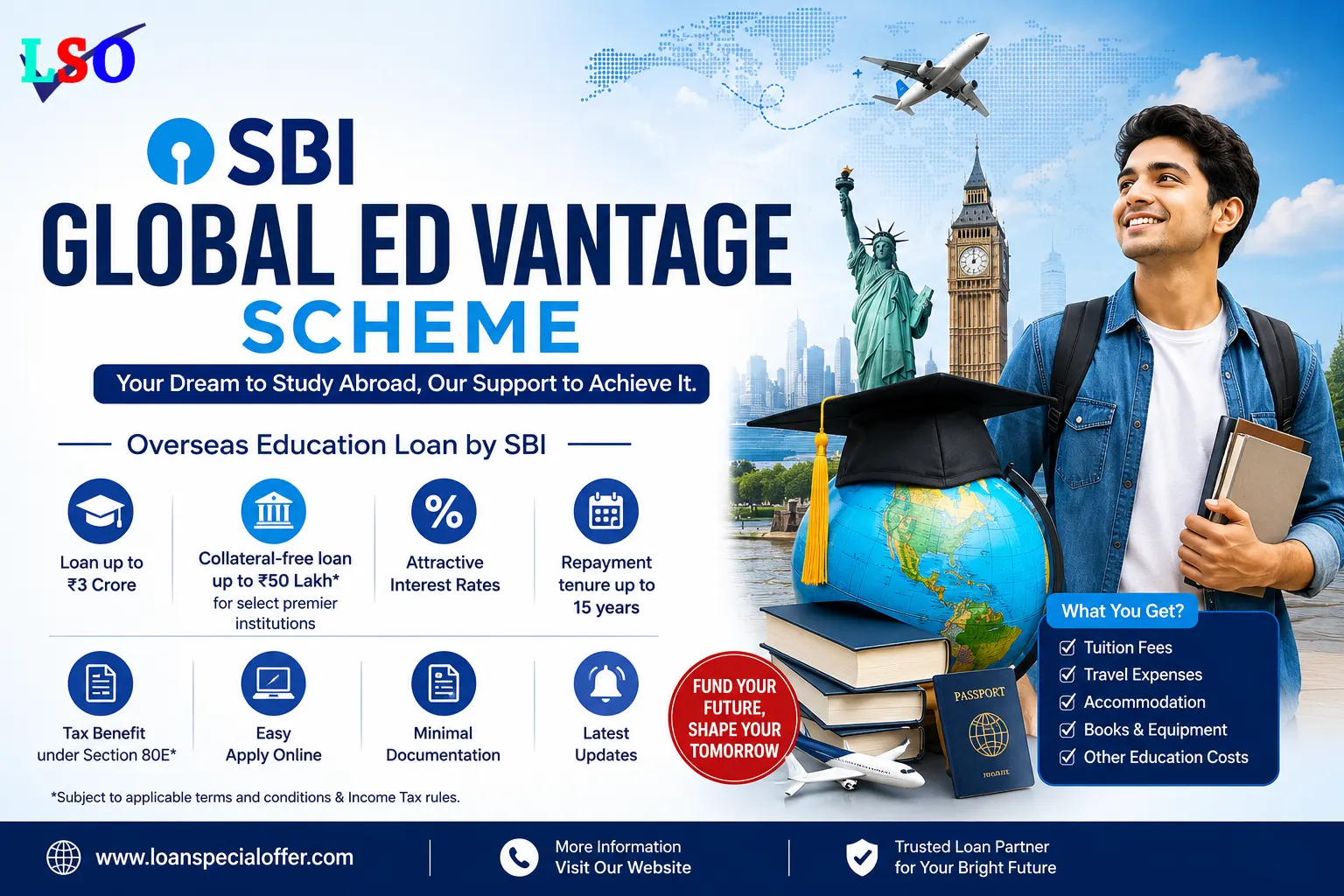
Click Here : to more information about –SBI Global Ed Vantage Scheme
Understanding the Moratorium Period
A moratorium is a period during which regular repayment may be deferred.
It may cover:
- The duration of the academic course
- An additional period after completion
The exact arrangement varies between lenders.
One important point is that interest may continue to accumulate during this period. Borrowers should understand whether unpaid interest is added to the outstanding principal or handled differently under the loan agreement.
Repayment and Monthly Instalments
Once repayment begins, the borrower generally pays regular monthly instalments.
The amount depends on:
- Principal borrowed
- Interest rate
- Repayment tenure
- Outstanding balance
A longer tenure can reduce the monthly payment but may increase the total interest paid over time.
Before accepting an offer, make sure the expected monthly obligation is affordable for the borrower and co-applicant.
How to Apply
The application process is generally straightforward.
1. Confirm Your Admission
Keep your admission or offer letter ready.
2. Estimate Your Total Costs
Prepare an estimate covering tuition, accommodation, books, travel and other academic expenses.
3. Compare Lenders
Review rates, charges, repayment terms, security requirements and moratorium conditions.
4. Check Eligibility
Make sure the student, course, institution and co-applicant meet the lender’s requirements.
5. Prepare the Paperwork
Collect academic, admission, identity, income and security-related documents, where applicable.
6. Submit the Application
Applications may be submitted online or through a branch, depending on the lender.
7. Complete Verification
The lender may verify the admission, course, institution, income and credit details.
8. Review the Approval Terms
Before accepting the offer, carefully check the sanction letter and all associated charges.
9. Receive the Funds
After approval, disbursement generally takes place according to the agreed terms and the institution’s fee schedule.
Education Loan vs Personal Loan
| Feature | Education Loan | Personal Loan |
| Main purpose | Education expenses | General personal expenses |
| Moratorium | May be available | Usually limited |
| Security | May be required | Often unsecured |
| Repayment structure | May be aligned with course completion | Usually starts sooner |
| Tax treatment | Potential benefits under applicable rules | Different treatment |
For education-related expenses, a dedicated student finance product may provide terms better suited to the academic timeline.
How to Keep Borrowing Costs Under Control
Borrow Only What You Need
Avoid taking a larger amount than necessary.
Compare Multiple Offers
Look at the complete cost rather than choosing solely based on the advertised rate.
Consider Servicing Interest During Study
If financially possible, paying interest during the course period may reduce the amount that accumulates.
Choose the Repayment Period Carefully
A longer term may lower the monthly payment but increase the overall cost.
Maintain a Strong Credit Profile
The co-applicant’s credit history and repayment record can influence the application.
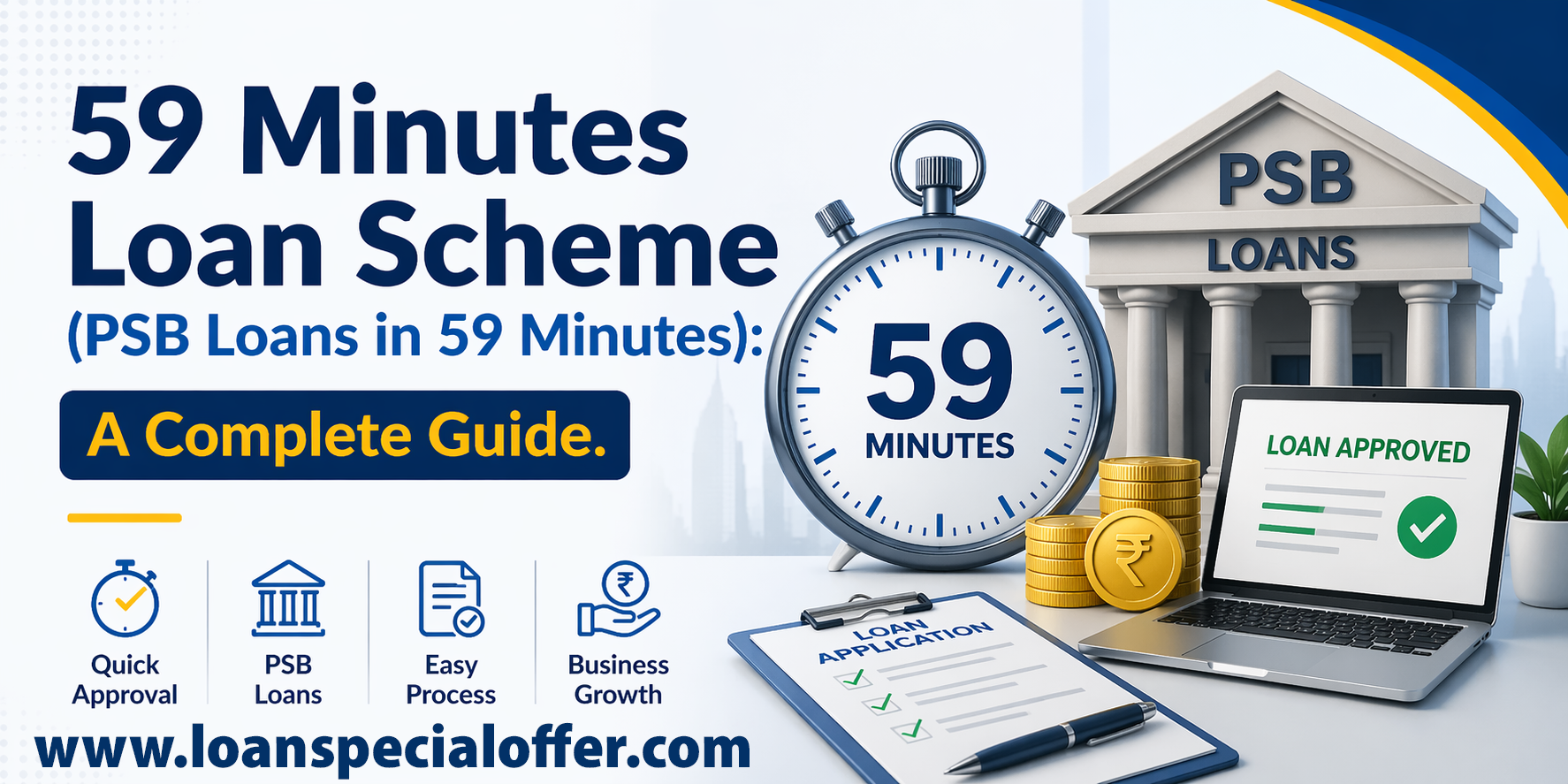
Click Here : to more information about – PSB Loans in 59 Minutes Scheme
FAQ
Some schemes allow borrowing without security up to specified limits. Larger amounts may require collateral, depending on the lender and applicable rules.
Yes, many lenders provide funding for eligible international courses and institutions. The university, programme, country and total cost may all be considered.
In many cases, yes. A parent or guardian may be required to support the application and demonstrate repayment capacity.
Regular instalments generally begin after the course and any applicable moratorium period. The exact schedule is set out in the loan agreement.
Early repayment may be permitted, although the applicable terms and charges should be checked in advance.
Interest on an eligible education loan may qualify for tax benefits under applicable Indian tax rules. Conditions and provisions should be checked for the relevant tax year.
What to Check Before Signing the Agreement
Before accepting an offer, review:
- Interest rate and rate structure
- Processing charges
- Repayment tenure
- Moratorium terms
- Interest charged during the study period
- Prepayment conditions
- Late-payment charges
- Security requirements
- Insurance requirements
- Disbursement schedule
Always read the sanction letter and loan agreement carefully.
Final Thoughts
An education loan in India can make higher education more financially manageable for students and families. It can help cover approved academic expenses while allowing repayment over an extended period.
However, borrowing should be planned carefully. Compare lenders, understand the total cost, review the repayment schedule, and make sure the loan fits your financial circumstances.
The best option is not always the one with the lowest advertised rate. The right choice is the one that offers a manageable repayment structure and terms that suit your needs.
Disclaimer: Interest rates, eligibility requirements, tax provisions, loan limits and lender policies can change. Verify the latest information with the relevant lender and official government sources before making a financial decision.



Leave a Reply