

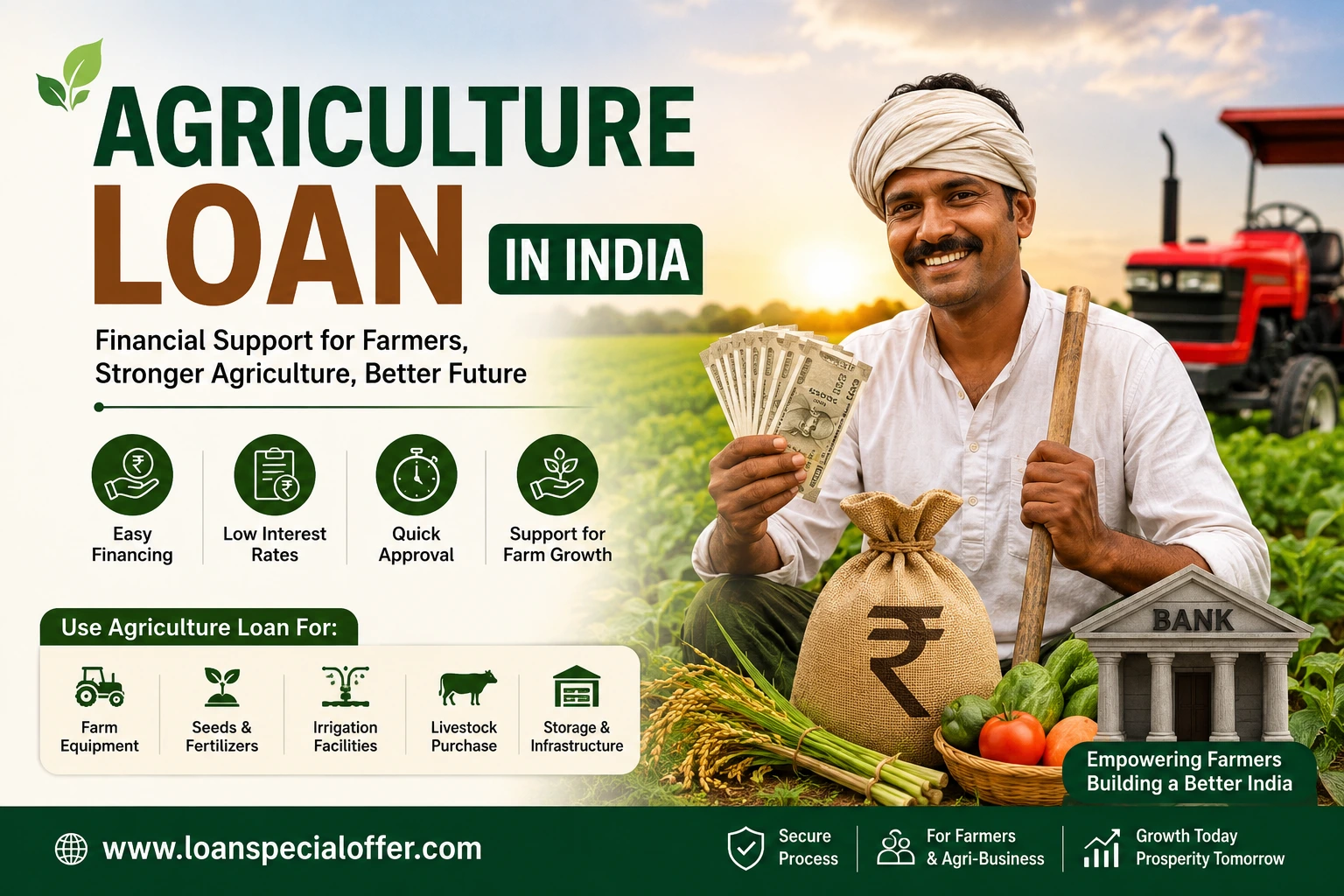
Farming requires regular investment in seeds, fertilizers, pesticides, irrigation, machinery, labour, storage, and transportation. For many farmers, arranging this money at the right time can be difficult. An agriculture loan in India can provide financial support for eligible farming and allied activities and help farmers manage both seasonal and long-term agricultural expenses.
Banks and financial institutions offer different agricultural financing products based on the purpose of the loan. An agriculture bank loan in India may be available for crop cultivation, farm machinery, dairy farming, irrigation, livestock, agricultural infrastructure, and certain land-related requirements. The interest rate, loan amount, repayment period, and eligibility can vary depending on the lender and loan product.
What Is an Agriculture Loan?
An agriculture loan is a financial facility designed for eligible farmers and agricultural borrowers. An agriculture loan in India can be used for approved agricultural activities such as purchasing seeds, fertilizers, pesticides, equipment, irrigation systems, livestock, and other farming requirements.
The purpose of an agriculture bank loan in India is to provide access to institutional credit so that eligible farmers can manage agricultural expenses without depending entirely on personal savings or informal borrowing. Depending on the product, financing can be short-term for crop-related expenses or longer-term for machinery and agricultural development.
Why Do Farmers Need Agriculture Loans?
Farmers have expenses throughout the agricultural cycle. Money may be required before sowing for seeds and fertilizers, during cultivation for irrigation and pesticides, and after harvesting for transportation, storage, or processing. An agriculture loan in India can help manage these expenses when sufficient funds are not immediately available.
An agriculture loan scheme in India may also support farmers who want to invest in tractors, irrigation equipment, dairy activities, livestock, farm infrastructure, or other eligible agricultural projects. Such financing can help farmers plan investments according to their farming requirements and repayment capacity.
Types of Agriculture Loans
Different agricultural loans are designed for different purposes. The appropriate agriculture loan in India depends on what the borrower wants to finance, whether it is seasonal cultivation, machinery, livestock, irrigation, or another eligible agricultural activity.
Common types include crop loans, Kisan Credit Card facilities, farm machinery loans, irrigation loans, dairy and livestock loans, agricultural infrastructure financing, and certain land-related loans. Different agriculture loan schemes have their own eligibility conditions, loan limits, interest rates, and repayment schedules.
1. Crop Loan
A crop loan is generally intended to meet expenses related to crop cultivation. An agriculture loan scheme in India may provide eligible farmers with financing for seeds, fertilizers, pesticides, labour, irrigation, harvesting, and other approved cultivation expenses.
The repayment schedule of a crop-related agriculture loan in India may depend on the crop cycle and expected agricultural income. Farmers should check the applicable repayment conditions and interest rate with their lender before taking the loan.
2. Kisan Credit Card Loan
The Kisan Credit Card system is intended to provide eligible farmers with convenient access to short-term agricultural credit. Under applicable agriculture loan schemes, eligible borrowers may use the facility for approved cultivation and certain allied agricultural expenses.
Before using a Kisan Credit Card facility, borrowers should understand the applicable agriculture loan interest rate, credit limit, repayment conditions, and other terms provided by the concerned financial institution.
3. Farm Machinery Loan
Agricultural machinery can help farmers improve efficiency and reduce manual work. An agriculture bank loan in India may be available for eligible borrowers who need financing for tractors, harvesters, irrigation equipment, and other approved farm machinery.
A machinery-related agriculture loan in India may be evaluated based on the applicant’s agricultural activity, repayment capacity, loan amount, equipment cost, and lender-specific eligibility criteria. Farmers should compare the available financing options before purchasing expensive machinery.
4. Dairy and Livestock Loan
Dairy farming and livestock activities can also require substantial investment. Certain agriculture loan schemes may provide financing for eligible expenses such as purchasing livestock, constructing sheds, buying equipment, or developing an approved dairy-related activity.
Eligibility for a dairy or livestock agriculture loan in India depends on the lender and the particular financing product. Applicants should confirm that their proposed activity is covered before submitting an application.
5. Irrigation and Farm Development Loan
Irrigation can play an important role in agricultural productivity, especially where farmers require additional water-management facilities. An agriculture bank loan in India may be available for eligible irrigation and farm-development requirements.
Farmers considering an irrigation-related agriculture loan scheme in India should check the permitted purpose, financing limit, repayment period, and documentation requirements before applying.
Agriculture Loan Interest Rate
The agriculture loan interest rate is one of the most important factors to consider before choosing agricultural financing. The applicable rate can depend on the lender, loan product, loan amount, repayment period, borrower profile, security requirements, and applicable government support.
Some eligible borrowers may receive interest-related benefits under specific agriculture loan schemes, subject to the rules applicable to the particular program. Therefore, borrowers should compare the effective borrowing cost rather than looking only at a headline rate.
Before selecting an agriculture loan interest rate, farmers should ask the lender about the applicable annual rate, processing charges, repayment schedule, late-payment charges, security requirements, and other costs. The final terms should be confirmed directly with the lender before signing the loan agreement.
Agriculture Loan Schemes in India
There are multiple agriculture loan schemes available through banks and financial institutions for different farming and allied activities. These may cover crop cultivation, agricultural machinery, irrigation, dairy, livestock, infrastructure, and other eligible requirements.
An agriculture loan scheme in India can have specific conditions based on the applicant’s farming activity, land or cultivation status, income, repayment capacity, and purpose of financing. Benefits and loan terms can therefore differ significantly between schemes.
Farmers should verify the latest details of agriculture loan schemes through the relevant official bank or government source. Eligibility, interest benefits, loan limits, documentation, and other conditions may change over time.
SBI Agricultural Loan
An SBI agricultural loan can be an option for eligible farmers looking for financing for agricultural and allied activities. State Bank of India offers different agricultural finance products, with eligibility and terms depending on the specific product.
Depending on the product, an SBI agricultural loan may support crop cultivation, agricultural equipment, dairy, irrigation, and other eligible purposes. Farmers should check the exact product because the interest rate, loan amount, repayment period, security requirements, and documents can differ.
Before applying for an SBI agricultural loan, applicants should check the current official eligibility requirements and understand whether the selected product is designed for short-term cultivation expenses or a longer-term agricultural investment.
SBI Agriculture Land Loan
Farmers searching for an SBI agriculture land loan should first identify the exact SBI product relevant to their requirement. Agricultural land-related financing can involve specific eligibility conditions, documentation, land requirements, and security conditions.
Before applying for an SBI agriculture land loan, applicants should verify requirements related to land ownership, agricultural activity, location, repayment capacity, security, and other applicable conditions directly with SBI.
Safal Agriculture Loan
People searching for a safal agriculture loan should verify the exact financial institution and product associated with this term before making a borrowing decision. The product name and current terms should be confirmed through an official source.
Before selecting a safal agriculture loan, borrowers should check the lender’s interest rate, eligibility criteria, loan amount, processing charges, repayment period, security requirements, and application procedure. Verified information is particularly important before submitting financial or personal documents.
Agriculture Loan Calculator
An agriculture loan calculator can help farmers estimate their potential EMI based on the loan amount, interest rate, and repayment tenure. It can be useful when deciding how much to borrow and comparing different repayment periods.
For example, a farmer considering an agriculture loan in India can enter the expected loan amount, applicable interest rate, and repayment tenure into a calculator to get an estimated monthly repayment amount.
An agriculture loan calculator can also show how changing the tenure may affect the estimated EMI and total interest. However, calculator results are only estimates, and the actual repayment amount depends on the final terms provided by the lender.
Example of Agriculture Loan EMI Calculation
Suppose a farmer is considering a loan of ₹5 lakh and wants to understand the approximate monthly repayment. An agriculture loan calculator can be used by entering the loan amount, applicable interest rate, and selected tenure.
The actual EMI for an agriculture loan in India will depend on the interest rate and repayment period offered by the lender. Therefore, farmers should use the calculator for planning purposes and confirm the final repayment schedule with the bank.
How to Apply for Agriculture Loan Online?

Many banks provide online facilities for starting or submitting loan applications. If the lender supports this facility, applicants can agriculture loan apply online through the bank’s official website or authorized digital channel.
To agriculture loan apply online, applicants may need to provide personal information, agricultural details, income information, loan requirements, and other information requested by the lender. Some lenders may also allow applicants to upload supporting documents online.
Steps to Apply Online
The general process to agriculture loan apply online may include:
- Visit the official website of the bank.
- Select the relevant agricultural loan.
- Read the eligibility criteria.
- Enter personal and agricultural details.
- Enter the required loan amount.
- Submit the application form.
- Upload documents if requested.
- Complete the lender’s verification process.
- Wait for the lender’s decision and further instructions.
The exact process for agriculture loan apply online differs between banks. Applicants should always use the official website or authorized application channel of the concerned lender.
Agriculture Bank Loan in India
An agriculture bank loan in India may be available through public-sector banks, private-sector banks, regional rural banks, cooperative banks, and other eligible financial institutions. Each lender may have different agricultural loan products.
When comparing an agriculture bank loan in India, farmers should consider the interest rate, loan amount, repayment period, processing fee, collateral requirements, eligibility criteria, documentation, and other applicable charges.
The right agriculture bank loan in India depends on the borrower’s actual requirement. A short-term crop loan may be more appropriate for seasonal expenses, while machinery or infrastructure financing may require a longer repayment period.
Agriculture Loan Eligibility
Eligibility for an agriculture loan in India depends on the lender and the selected loan product. Farmers, cultivators, and eligible individuals involved in agricultural or allied activities may qualify if they satisfy the lender’s requirements.
For an agriculture loan scheme in India, the lender may consider the applicant’s age, farming activity, land ownership or cultivation status, income, repayment capacity, existing liabilities, credit history, and purpose of the loan.
Some agriculture loan schemes may require specific land, cultivation, or agricultural activity documents. Applicants should therefore check the exact eligibility requirements before submitting their application.
Documents Required for Agriculture Loan
The documents required for an agriculture bank loan in India depend on the loan type and lender. Commonly requested documents may include identity proof, address proof, photographs, bank account details, land or cultivation documents, and information about agricultural activity.
For an SBI agricultural loan, applicants may need to provide documents related to their identity, agricultural activity, land, income, and other information requested by the bank. The exact document list should be confirmed with SBI before applying.
Keeping accurate documents ready can make the application process easier. Farmers applying for an agriculture loan in India should make sure that the information provided in the application matches their supporting documents.
How Much Agriculture Loan Can a Farmer Get?
The loan amount available under an agriculture loan in India depends on the type of financing, agricultural activity, expected expenses, repayment capacity, land or cultivation details, and the lender’s policies.
For an agriculture bank loan in India, the maximum loan amount can vary between products. Crop loans, machinery loans, dairy loans, infrastructure loans, and land-related financing may have different limits.
Farmers should avoid borrowing more than they can reasonably repay. Using an agriculture loan calculator before applying can help estimate the potential repayment burden and support better financial planning.
Agriculture Loan Repayment Period
The repayment period of an agriculture loan in India depends on the purpose and type of financing. Short-term crop financing may have a different repayment schedule from long-term loans for machinery, infrastructure, or other investments.
Before choosing an agriculture loan scheme in India, farmers should understand the instalment schedule, due dates, repayment frequency, and charges applicable to delayed payments.
A longer repayment period may reduce the regular repayment amount but can increase the overall interest cost. Farmers can use an agriculture loan calculator to compare different repayment periods before making a decision.
Government Support for Agriculture Loans
Government-supported programs can help improve access to institutional credit for eligible farmers. Certain agriculture loan schemes may provide interest-related benefits, subsidies, or other forms of support subject to applicable rules and eligibility conditions.
Farmers interested in an agriculture loan scheme in India should check the latest official guidelines because the benefits available under a particular program can depend on the farmer, agricultural activity, location, lender, and other conditions.
Farmers should not assume that every agricultural loan automatically receives a subsidy or interest benefit. Before applying for an agriculture loan in India, applicants should verify the applicable benefit directly from the relevant official source.
Agriculture Loan vs Personal Loan for Farming
A personal loan and an agricultural loan serve different purposes. An agriculture loan in India is specifically designed for eligible agricultural or allied activities, while a personal loan is generally an unsecured financing product intended for broader personal requirements.
Farmers considering an agriculture bank loan in India should first determine whether their requirement qualifies as an agricultural purpose. A suitable agricultural financing product may have terms specifically designed around farming requirements.
Benefits of Agriculture Loans
One major benefit of an agriculture loan in India is access to funds for eligible farming expenses when the farmer’s available cash may not be sufficient. This can help with seasonal cultivation and agricultural investment requirements.
An agriculture loan scheme in India may also support purchases of agricultural machinery, irrigation equipment, livestock, dairy infrastructure, and other approved activities. The actual benefits depend on the selected loan and lender.
Agricultural financing can provide an organized repayment structure compared with informal borrowing. However, farmers should always compare the agriculture loan interest rate and other charges before choosing a loan.
Things to Check Before Taking an Agriculture Loan
Before taking an agriculture bank loan in India, farmers should carefully read the complete loan terms. The lowest advertised interest rate does not necessarily mean the lowest total borrowing cost.
Borrowers should compare the agriculture loan interest rate, processing fees, repayment period, collateral requirements, late-payment charges, insurance requirements, prepayment conditions, and other applicable costs.
Farmers should also use an agriculture loan calculator to estimate whether the expected repayment is manageable. The loan amount should be based on actual agricultural requirements and realistic repayment capacity.
Common Mistakes to Avoid
One common mistake when applying for an agriculture loan in India is failing to check eligibility before submitting an application. Farmers should understand the selected loan’s requirements before completing the application.
Another mistake is focusing only on the agriculture loan interest rate while ignoring processing fees and other charges. Comparing the total cost of borrowing provides a better basis for making a decision.
Applicants should also be careful when they agriculture loan apply online. Personal and financial information should only be submitted through the official website or authorized application channel of the concerned lender.
FAQ
Yes, eligible tenant farmers may qualify for certain agricultural credit facilities, subject to the lender’s rules and required proof of cultivation.
Some agricultural loan products may be available without collateral up to specified limits, depending on the lender and applicable regulations.
Yes, certain agricultural financing products are specifically designed to help eligible farmers purchase tractors and other farm machinery.
A low credit score can affect loan approval and terms, although agricultural loan eligibility also depends on farming activity, repayment capacity, land or cultivation status, and the lender’s criteria.
Yes, eligible dairy farmers may obtain financing for approved expenses such as purchasing cattle, constructing sheds, and buying dairy equipment.
Delayed repayment may result in additional charges and can affect the borrower’s credit history. Farmers facing repayment difficulties should contact their lender as early as possible.
Depending on the lender and loan product, financing may be available for eligible organic farming activities and related agricultural requirements.
Yes, women involved in eligible agricultural activities can apply for applicable agricultural financing, subject to the lender’s eligibility requirements.
Yes, certain agricultural loan products can finance eligible equipment such as irrigation systems, harvesters, pumps, and other farm machinery.
It may be possible depending on the lender’s policies, existing outstanding debt, repayment history, income, and overall repayment capacity.
Final Thoughts
An agriculture loan in India can provide eligible farmers with financial support for crop cultivation, machinery, irrigation, livestock, dairy farming, infrastructure, and other agricultural activities. Different agriculture loan schemes are designed for different purposes, so choosing the right product is important.
Farmers considering an SBI agricultural loan, safal agriculture loan, SBI agriculture land loan, or another agriculture bank loan in India should compare interest rates, eligibility, loan amounts, repayment periods, fees, and documentation before making a decision.
Using an agriculture loan calculator can help estimate potential repayments, while online facilities can make it easier to agriculture loan apply online where supported by the lender. Always verify the latest information from the official bank or government source before applying.







Leave a Reply