
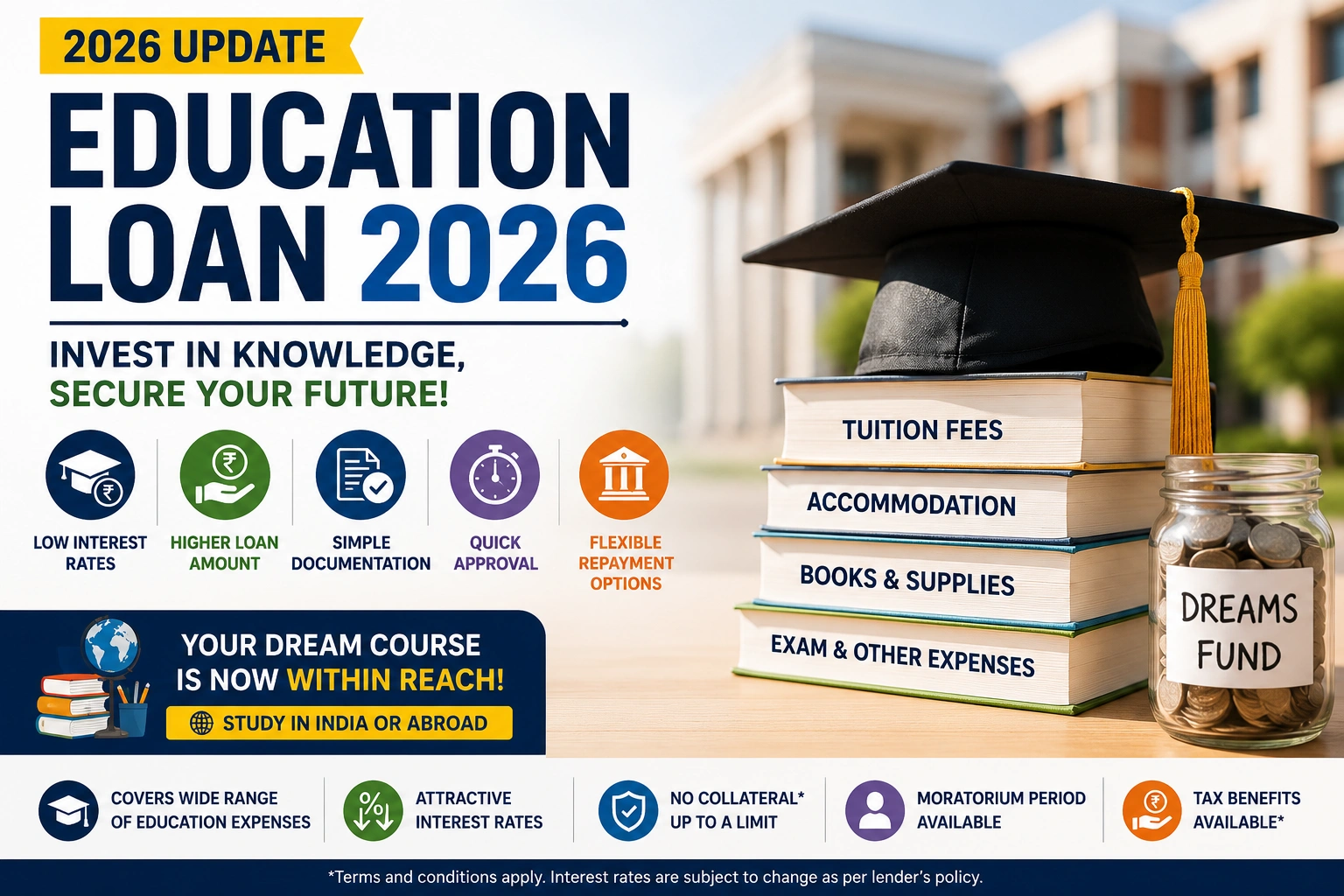
What is an Education Loan?
An education loan is a financial assistance program offered by banks and financial institutions to help students pursue higher education in India or abroad. The loan covers tuition fees, accommodation expenses, examination fees, books, and other academic costs.
Latest Education Loan Updates in 2026
Several banks have introduced student-friendly education loan schemes with lower interest rates, flexible repayment options, and simplified online application processes. Many lenders now offer collateral-free loans for eligible students enrolled in recognized institutions.
Education Loan Eligibility Criteria
To qualify for an education loan eligibility assessment, applicants must be Indian citizens, secure admission to a recognized educational institution, and meet the lender’s academic and financial requirements. A co-applicant, usually a parent or guardian, is often required.
Documents Required for Education Loan
Students must submit essential education loan documents during the application process. Proper documentation helps lenders verify identity, admission status, and repayment capability before loan approval.
Identity Proof
- Aadhaar Card
- PAN Card
- Passport
- Voter ID Card
Address Proof
- Aadhaar Card
- Utility Bills
- Passport
- Driving License
Academic Documents
- Admission Letter
- Mark Sheets of Previous Qualifications
- Entrance Exam Scorecard
- Course Fee Structure
Income Documents of Co-Applicant
- Salary Slips (Last 3 Months)
- Form 16
- Income Tax Returns
- Bank Statements (Last 6 Months)
Additional Documents
- Passport-size Photographs
- KYC Documents
- Collateral Documents (if required)
Education Loan Interest Rates
The education loan interest rate varies depending on the lender, course type, institution, loan amount, and applicant profile. Students with strong academic records may qualify for preferential rates and special concessions.
Expenses Covered Under Education Loan
A comprehensive student loan can cover tuition fees, hostel charges, travel expenses for overseas education, laboratory fees, examination costs, books, laptops, and other study-related expenses approved by the lender.
Benefits of Taking an Education Loan
An education financing solution allows students to focus on their studies without immediate financial pressure. It also offers tax benefits under applicable income tax laws and helps build a positive credit history when repaid responsibly.
Education Loan Repayment Process
Most lenders provide a moratorium period during the course duration plus a few months after completion. Students can begin repayment after securing employment, making the loan more manageable.
Conclusion
An education funding option can help students achieve their academic goals without financial constraints. Before applying, compare lenders, review interest rates, and ensure all required documents are ready for a smooth approval process.
FAQ’S
The loan amount depends on the course and lender. Some banks offer loans exceeding ₹1 crore for overseas education.
Yes, many lenders provide collateral-free loans for selected institutions and eligible students.
Generally, parents, guardians, spouses, or close relatives can act as co-applicants.
Repayment usually begins after the moratorium period ends, which includes the course duration and a grace period.
Yes, interest paid on eligible education loans may qualify for tax deductions under applicable tax provisions.