
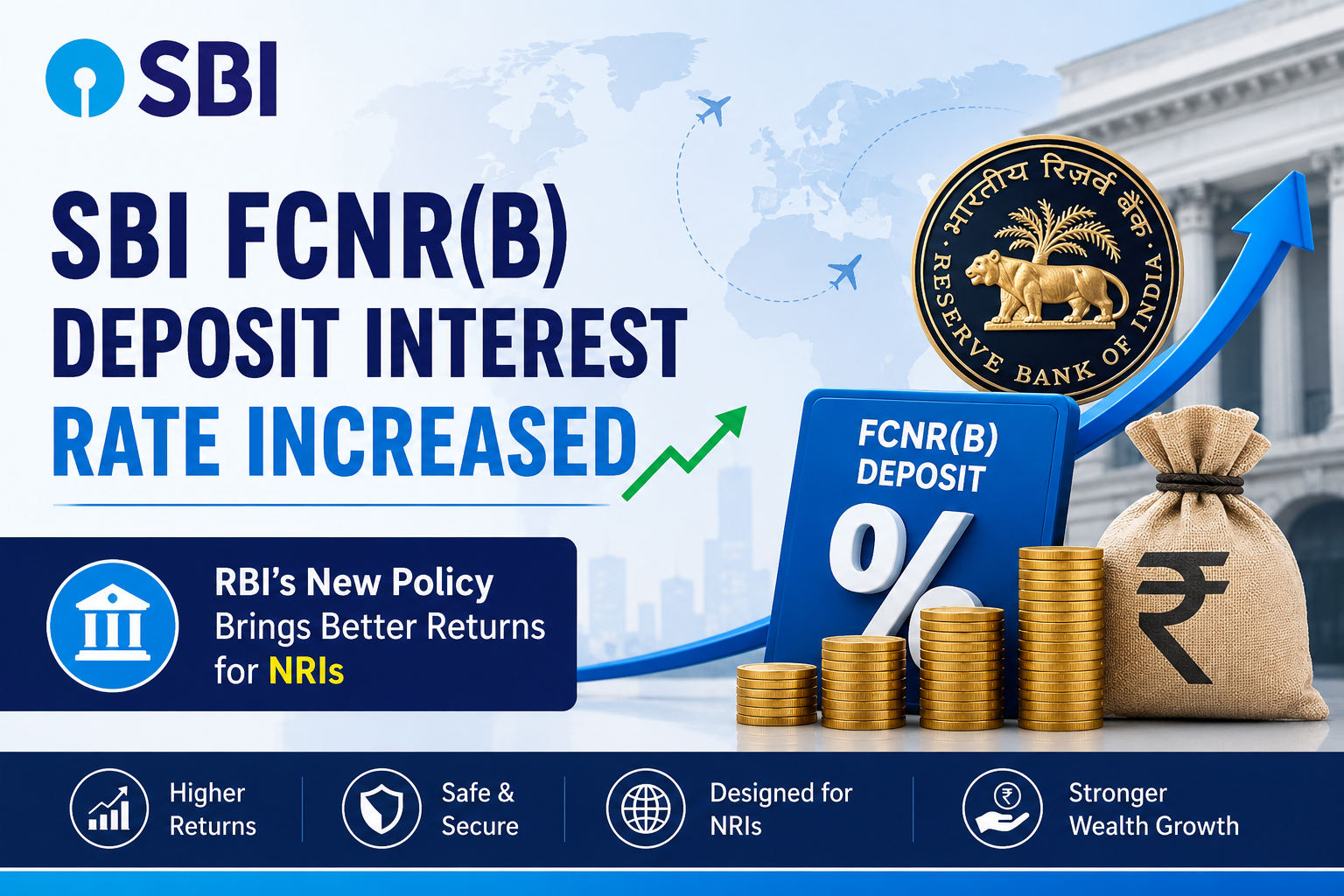
The SBI FCNR(B) Deposit scheme is making headlines after the Reserve Bank of India (RBI) introduced a new policy aimed at attracting more foreign currency deposits into the Indian banking system. Following the RBI’s decision, the State Bank of India (SBI) has revised the interest rates on its Foreign Currency Non-Resident (Bank) or FCNR(B) deposits. This move is expected to benefit Non-Resident Indians (NRIs), Overseas Citizens of India (OCIs), and Persons of Indian Origin (PIOs) by offering higher returns on eligible deposits. The revised rates are part of the RBI’s broader strategy to strengthen foreign exchange reserves and encourage overseas investments into India.
What is the FCNR(B) Deposit Scheme?
The FCNR(B) Deposit Scheme is a fixed deposit account specially designed for Non-Resident Indians (NRIs). Unlike regular fixed deposits, FCNR(B) deposits are maintained in foreign currencies such as the US Dollar (USD), British Pound (GBP), Euro (EUR), Australian Dollar (AUD), Canadian Dollar (CAD), and Japanese Yen (JPY). Since the deposit remains in foreign currency, investors are protected from exchange rate fluctuations between the Indian Rupee and their chosen currency. This makes FCNR(B) accounts a preferred investment option for Indians living abroad who want to earn interest while avoiding currency risk.
What Changed Under the RBI’s New Policy?
The RBI New Policy has temporarily relaxed the interest rate ceiling on FCNR(B) deposits and certain NRE deposits until September 30, 2026. Additionally, the government has announced support for hedging costs on eligible FCNR(B) deposits with maturities ranging from three to five years. These measures allow banks to offer more competitive interest rates and encourage NRIs to bring more foreign currency into India’s banking sector. The policy is expected to improve liquidity while strengthening India’s foreign exchange reserves.
How Much Interest is SBI Offering Now?
Under the revised SBI FCNR Interest Rate, eligible customers can now earn up to 5.75% annually on selected five-year US Dollar FCNR(B) deposits, while certain large-value deposits may receive rates as high as 6%, depending on eligibility and applicable terms. The exact interest rate varies according to the currency, deposit tenure, and investment amount. SBI has updated its official interest rate schedule to reflect these changes, making the scheme more attractive for overseas investors looking for stable returns.
Benefits for NRI Investors
The updated NRI Investment Scheme offers several advantages to overseas Indians. Since deposits remain in foreign currency, investors are protected from exchange rate losses. Higher interest rates also mean better returns compared to previous offerings. In many cases, the interest earned on FCNR(B) deposits may qualify for tax benefits in India, depending on the investor’s residential status and applicable tax regulations. Combined with SBI’s strong reputation and RBI’s supportive policy changes, the revised FCNR(B) scheme provides an attractive opportunity for long-term foreign currency investments.
Things to Know Before Opening an FCNR(B) Account
Before opening an FCNR(B) Account, investors should carefully review the latest interest rates, eligible currencies, minimum deposit requirements, premature withdrawal rules, and account maturity conditions. Interest rates differ based on currency and tenure, so comparing available options is important. Since RBI guidelines and bank policies may change over time, applicants should always verify the latest information through SBI’s official website or authorized bank branches before investing.
Conclusion
The revised SBI FCNR(B) Scheme has become one of the most attractive investment options for NRIs following the RBI’s latest policy changes. Higher interest rates, foreign currency protection, and the security of India’s largest public sector bank make this scheme an appealing choice for overseas Indians seeking stable returns. However, investors should always assess their financial goals, investment horizon, and applicable banking regulations before making any investment decision.